
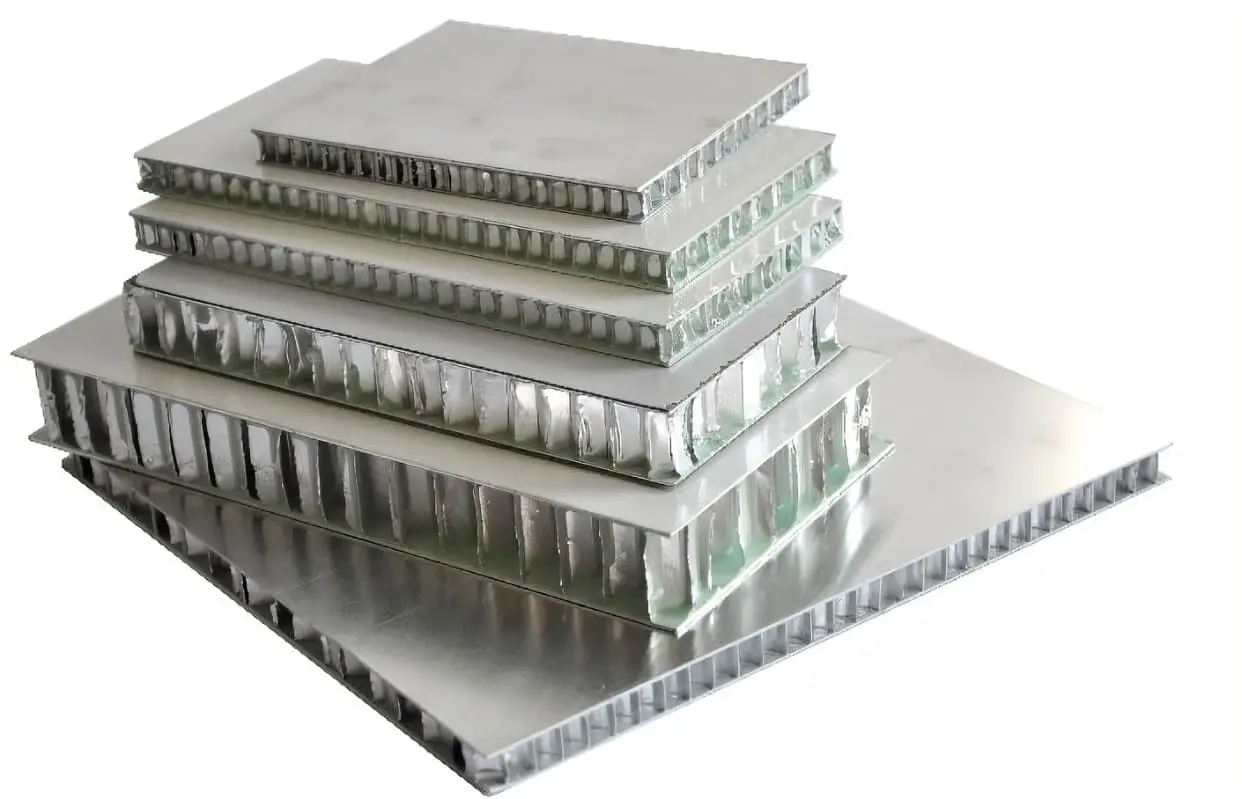
Learn the most common thickness ranges, what they are usually used for, and how to choose the right panel for different projects
If you are new to aluminum honeycomb panels, one of the first questions you will probably ask is: what thickness should I use? The short answer is that there is no single rule. Aluminum honeycomb panels are used across architecture, interiors, transportation, marine, cleanroom systems, display structures, and industrial equipment, so the “right” thickness depends on the balance between rigidity, flatness, weight, panel size, and installation method. Published manufacturer data shows that common market thickness points often include 10, 12, 15, 20, 25, and 30 mm, while some suppliers also offer broader custom ranges up to 100 mm. In architecture-specific systems, the published range is often narrower, such as 6–20 mm, while cleanroom systems can also appear at specialized thicknesses like 13 mm and 51 mm.
For beginners, the easiest way to understand aluminum honeycomb panel thickness is to think of it as a tendency guide, not a strict industry standard. Thinner panels are generally chosen where low weight, easy handling, and a clean surface are more important. Mid-range thicknesses are often used when projects need more stiffness and better large-panel performance. Thicker panels are more likely to appear in high-rigidity, large-format, or system-based applications. This is why two projects can use the same panel thickness for completely different reasons.
In the lighter range, roughly 6–15 mm, aluminum honeycomb panels are commonly used for interior wall panels, ceilings, decorative cladding, partitions, furniture elements, and some lightweight architectural skins. Alucoil, for example, publishes 6 mm architectural honeycomb panels for façades, false ceilings, sun shades, and slats, while interior-oriented panel manufacturers also position aluminum honeycomb panels for wall, ceiling, and furniture applications where low weight, flatness, and rigidity are important.
In the 20–25 mm range, panels are more commonly associated with façade cladding, partitions, canopies, and commercial building elements that need stronger stiffness and flatter visual performance across larger panel sizes. Broader market suppliers also list 20 mm, 25 mm, and 30 mm as common standard thicknesses, which aligns with how these sizes are frequently used when customers need more structural confidence without moving into highly specialized custom systems.
When you move into 30–50 mm, the application profile starts to shift toward larger-format, higher-rigidity, or more specialized panel systems. Alucoil’s architectural literature specifically notes that large building sun-shade elements can use 20–40 mm panels, and cleanroom or technical wall systems can be much thicker, such as 51 mm studless wall panels. Across the wider market, these thicker panels may also appear in transportation interiors, marine partitions, industrial covers, and other custom-engineered structures where stiffness and system integration matter more than minimum thickness.
It is also important not to judge a panel by total thickness alone. A 20 mm panel is not automatically “better” than a 15 mm panel. Face-sheet thickness, panel size, core design, finish, fastening method, and span conditions all affect the final performance. Plascore explicitly highlights that honeycomb panels gain stiffness dramatically with very little weight increase, while architectural systems from Alucoil show that different thicknesses are paired with different installation methods and end uses. In practice, selection should always consider the full panel build-up, not just the overall thickness number.
The table below is a simplified, beginner-friendly comparison based on published manufacturer ranges and application examples. It is meant to help new buyers understand the market quickly, not to replace engineering review or project-specific specification work.
| Total Thickness Range | Typical Tendency | Common Applications |
|---|---|---|
| 6–15 mm | Lightweight, easy handling, clean surface | Interior walls, ceilings, partitions, furniture panels, display systems |
| 20–25 mm | Balanced stiffness and flatness | Facade cladding, canopies, commercial wall systems, larger decorative panels |
| 30–50 mm | Higher rigidity for larger panels | Sunshades, transportation interiors, marine partitions, industrial structures |
| 50 mm+ | Engineered systems and specialized use | Cleanroom walls, utility walls, technical systems, custom industrial applications |
aluminum honeycomb panels are not defined by one standard thickness range across all industries. The same product family can serve lightweight decorative uses, high-flatness façade systems, transportation interiors, marine fit-outs, and specialized cleanroom or industrial structures. The smartest way to choose a panel is to start with the application, then match the thickness, facing, and fabrication details to the project’s real performance needs.
If you are evaluating aluminum honeycomb panels for your next project and want help choosing the right thickness, structure, or finish, contact Ulike for a quote or further cooperation.