A practical guide to the main internal floating roof designs used in storage tanks, and why aluminum honeycomb full-contact systems are often the smarter long-term option
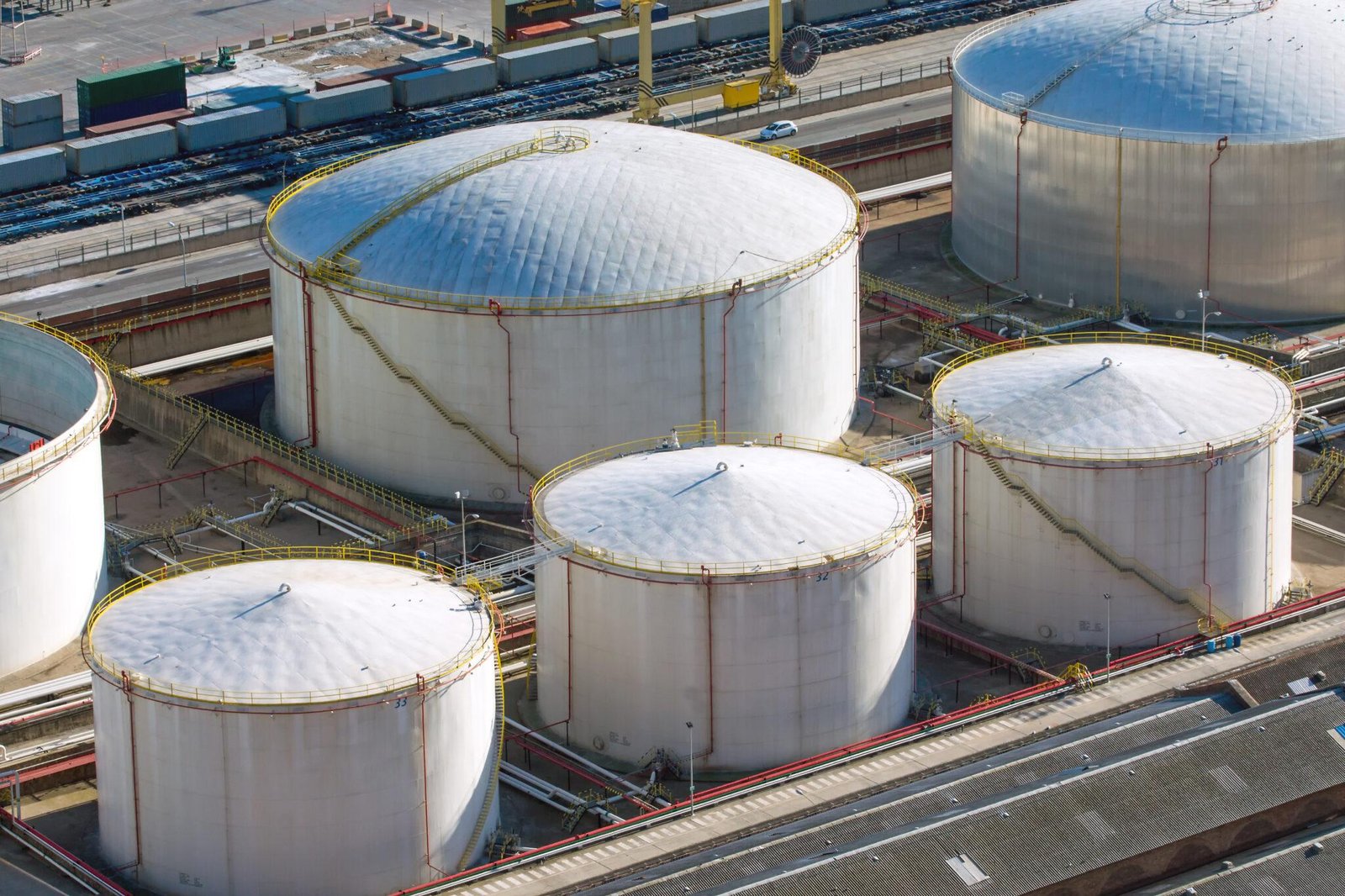
Internal floating roofs (IFRs) are widely used inside fixed-roof storage tanks to reduce vapor loss, improve safety, and lower emissions. An IFR floats directly on, or very close to, the stored liquid surface, moving up and down as the tank fills and empties. This helps reduce evaporation of volatile products and lowers the risk of combustible vapor accumulation inside the tank.
There are several different IFR designs on the market. In broad terms, buyers usually compare pontoon-type roofs and full-contact roofs. Pontoon-type roofs keep the deck above the liquid, leaving a vapor space underneath, while full-contact roofs sit directly on the liquid surface and therefore minimize or eliminate that vapor space.
1. Steel Pan Internal Floating Roof
A steel pan IFR is one of the simpler and more economical designs. It uses a steel deck with a welded rim to create buoyancy and provide a mounting surface for the rim seal. It can provide effective vapor control and is relatively easy to install and maintain. However, it has limited reserve buoyancy, so if liquid accumulates on the deck, the roof may sink more quickly than other designs.
2. Steel Open-Top Pontoon IFR
This design adds interconnected open-top pontoons around the outer edge of the deck. The pontoons improve stiffness and allow the roof to tolerate some liquid accumulation without immediate failure. It can reduce construction cost and simplify inspection, but the open-top configuration can also be more vulnerable to liquid accumulation.
3. Steel Pontoon IFR
A steel pontoon IFR uses sealed buoyant compartments arranged around the roof deck. This gives the system stronger reserve buoyancy and improved stability. This style is often preferred where roof stability is especially important, including more demanding operating environments.
4. Steel Reverse-Slope Pontoon IFR
A reverse-slope pontoon design is meant to direct liquid toward the center so it can be drained away. It is more commonly associated with external floating roofs, although it can also be used as an IFR. Its larger pontoons improve overturning resistance, but the design is generally less cost-effective when used internally.
5. Full-Contact IFR
A full-contact IFR floats directly on the stored product. This greatly reduces the vapor space under the roof. Full-contact decks eliminate the vapor space that remains under pontoon-style decks, which is one reason they are often chosen when emissions control is a top priority. These roofs also tend to feel more solid and stable in service.
6. Aluminum Honeycomb Full-Contact IFR
An aluminum honeycomb IFR is a full-contact system built from honeycomb sandwich panels or sealed honeycomb compartments. This design combines lightweight construction with high rigidity and structural integrity. Honeycomb-based roofs are designed to sit directly on the liquid surface while maintaining excellent panel stability.
Why Aluminum Honeycomb Panels Are a Better Material Choice
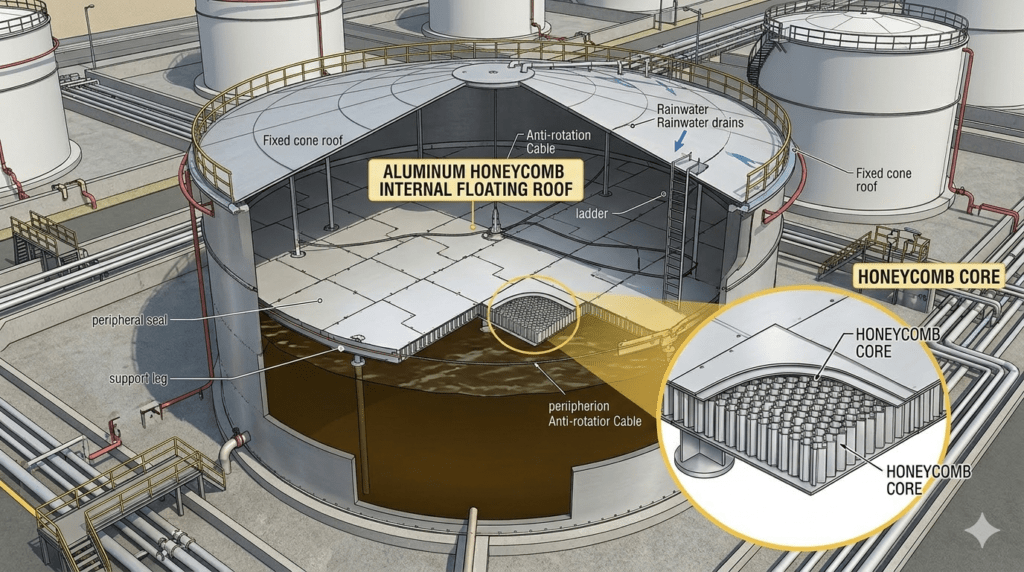
For many volatile-liquid storage applications, aluminum honeycomb full-contact roofs offer a stronger overall value proposition than conventional steel pan or pontoon-style alternatives.
The first reason is better emissions control. Because full-contact roofs sit directly on the liquid surface, they minimize or eliminate vapor accumulation under the deck. This leads to improved vapor containment and lower emissions compared to pontoon-type designs.
The second reason is high strength with low weight. Aluminum is significantly lighter than steel, which reduces the overall load on the floating roof system. At the same time, the honeycomb structure provides excellent stiffness, allowing the panel to maintain flatness and structural integrity without adding unnecessary weight.
The third reason is durability and structural reliability. Honeycomb panels reduce the need for extensive welding in wetted areas, which helps minimize long-term corrosion risks. The panel structure is engineered to maintain performance over time, even in demanding tank environments.
The fourth reason is reserve buoyancy and safety. Honeycomb-based designs are typically engineered with multiple sealed compartments. This provides additional safety margins, allowing the roof to remain operational even if part of the structure is compromised.
The fifth reason is maintenance and inspection practicality. Well-designed honeycomb systems can include inspection access points and features that allow operators to verify integrity and safety conditions more easily. This helps reduce maintenance complexity over the life of the system.
It is important to note that aluminum materials must be evaluated for chemical compatibility with the stored product. When compatibility is confirmed, aluminum honeycomb full-contact systems provide an effective combination of performance, durability, and long-term value.
| IFR Type | Basic Design | Main Advantages | Main Limitations | Typical Use Tendency |
|---|---|---|---|---|
| Steel Pan IFR | Simple steel deck with welded rim | Low cost, easy installation | Low buoyancy reserve | Basic applications |
| Steel Open-Top Pontoon | Deck with open-top pontoons | Improved stiffness, lower cost | Liquid accumulation risk | General use |
| Steel Pontoon | Sealed buoyant compartments | Good stability, higher safety | Heavier, vapor space remains | Performance-focused projects |
| Reverse-Slope Pontoon | Sloped design for drainage | Improved liquid control | Higher cost | Special applications |
| Full-Contact IFR | Direct contact with liquid | Low emissions, stable | More complex system | Emission-sensitive storage |
| Aluminum Honeycomb IFR | Honeycomb panel structure | Lightweight, strong, low emissions | Requires compatibility check | High-performance storage |
Choosing the right internal floating roof depends on balancing cost, performance, safety, and long-term maintenance. While traditional steel designs remain widely used, aluminum honeycomb full-contact roofs provide a compelling advantage in applications where emissions control, structural efficiency, and durability are critical.
If you are evaluating aluminum honeycomb panels for internal floating roof applications, contact Ulike for a quote or further cooperation