
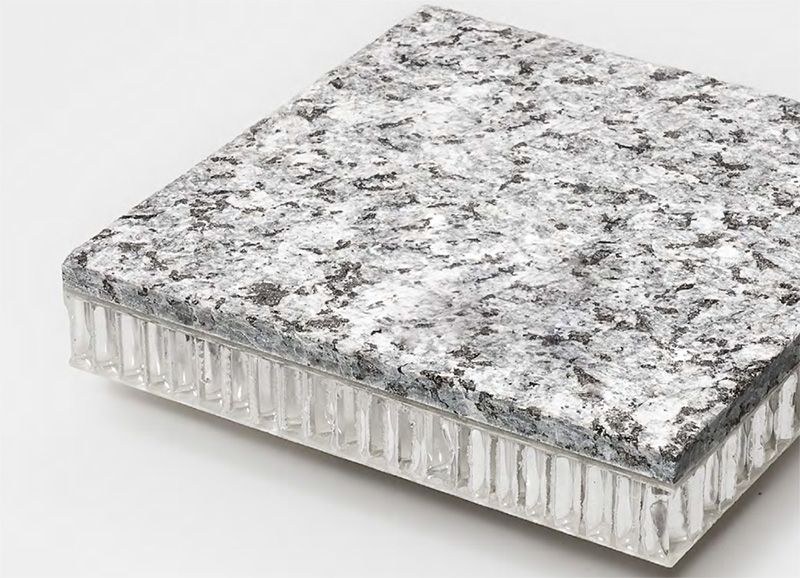
Stone panels significantly reduce weight compared to solid stone by using a thin natural stone layer bonded to a lightweight backing. This reduction lowers structural load on buildings, allowing for more flexible design possibilities. It also simplifies handling, transportation, and installation, helping reduce labor costs and improving efficiency, especially in high-rise or large façade applications
Stone panels preserve the authentic look, texture, and variation of natural stone surfaces. This allows architects and designers to achieve a premium, high-end aesthetic without the limitations of solid stone. The panels maintain visual consistency across large areas while still offering the richness and uniqueness expected from natural materials
By combining stone with a reinforced backing such as aluminum honeycomb, the panel gains improved strength and structural stability. This reduces the risk of cracking or breakage compared to solid stone slabs. It also allows the panels to perform better under stress, vibration, or environmental changes, making them suitable for a wider range of applications
The reduced weight and panelized format make stone panels easier and faster to install compared to traditional stone systems. They can be integrated into modern cladding systems and mounting methods, helping save time on-site. This efficiency is particularly valuable for large-scale projects where installation speed and consistency are critical
Stone panels offer better long-term performance due to the combination of natural stone and engineered backing materials. The structure helps resist cracking, warping, and environmental stress. With proper fabrication and finishing, they can perform well in both interior and exterior environments, maintaining appearance and integrity over time
Applications
The honeycomb stone panel can be used as exterior and interior claddings
- Cladding
- Interior
- Furniture