how cleanrooms are classified in the United States and why ISO 14644-1 is now the main standard used for airborne particle cleanliness
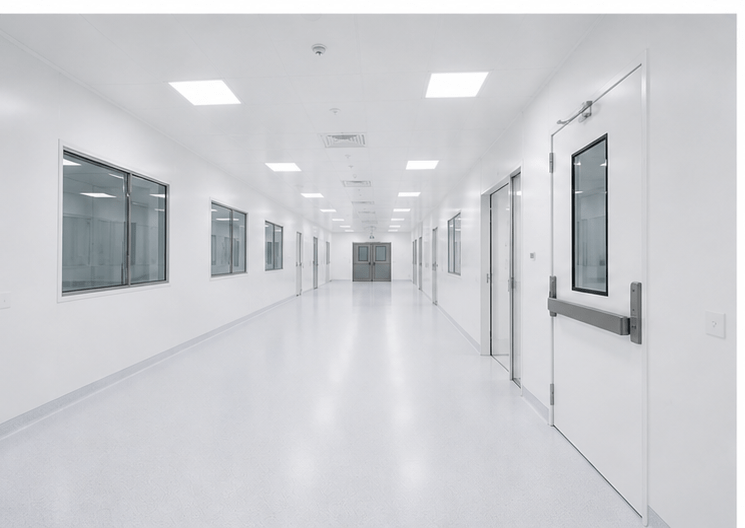
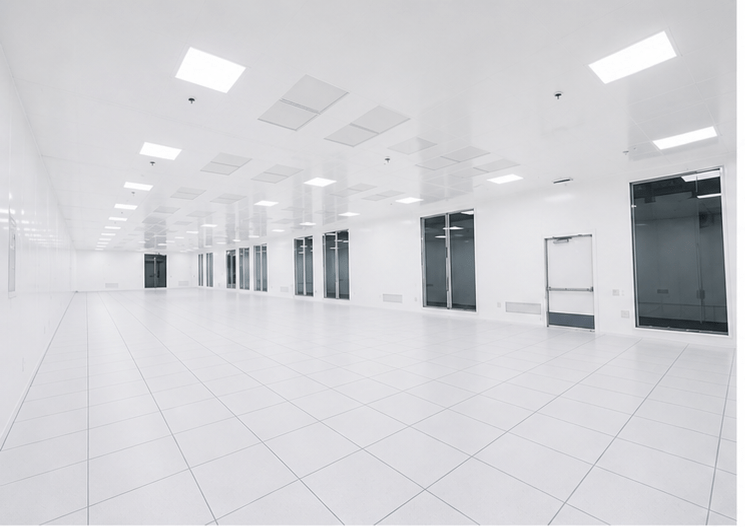
Cleanrooms are controlled environments designed to limit airborne particles, contamination, and pollutants. In the United States, cleanrooms are commonly discussed using two classification systems: the older FED STD 209E system and the current ISO 14644-1 standard.
Historically, the U.S. cleanroom industry used Federal Standard 209E, which classified cleanrooms by the maximum number of particles allowed per cubic foot of air. This is where familiar terms such as Class 100, Class 1,000, Class 10,000, and Class 100,000 come from. Although many people in the U.S. still use these terms in daily conversation, FED STD 209E was officially canceled in 2001 and replaced by ISO 14644-1 and ISO 14644-2.
Today, ISO 14644-1 is the primary cleanroom classification standard used in the United States. Instead of measuring particles per cubic foot, ISO 14644-1 measures airborne particle concentration per cubic meter of air. The FDA also recognizes ISO 14644-1:2015 for cleanroom classification in medical device contexts, describing it as a standard for classifying air cleanliness by airborne particle concentration.
The most important difference is simple: FED STD 209E uses particles per cubic foot, while ISO 14644-1 uses particles per cubic meter. This is why older U.S. project documents may say “Class 100,” while newer specifications often say “ISO Class 5.” In practical terms, Class 100 is generally equivalent to ISO Class 5, Class 1,000 to ISO Class 6, Class 10,000 to ISO Class 7, and Class 100,000 to ISO Class 8.
For companies planning cleanroom construction in the U.S., it is important to understand both systems. Many architects, contractors, equipment suppliers, and facility owners still use FED STD 209E language because it is familiar. However, when writing formal specifications, testing requirements, or certification documents, ISO 14644-1 is usually the more appropriate reference.
U.S. Cleanroom Classification Table
The table below provides a simplified comparison between common U.S. FED STD 209E terminology and the current ISO 14644-1 classification system.
| FED STD 209E Class | ISO Equivalent | Particle Limit Reference | Typical U.S. Use |
|---|---|---|---|
| Class 1 | ISO Class 3 | Very strict particle control | Advanced microelectronics, precision research, ultra-clean processes |
| Class 10 | ISO Class 4 | High-level contamination control | Semiconductor processes, advanced electronics, sensitive production areas |
| Class 100 | ISO Class 5 | 100 particles/ft³ at ≥0.5 μm under FED STD 209E | Pharmaceutical filling, aseptic processing zones, critical medical device areas |
| Class 1,000 | ISO Class 6 | 1,000 particles/ft³ at ≥0.5 μm under FED STD 209E | Controlled manufacturing, clean assembly, higher-grade support areas |
| Class 10,000 | ISO Class 7 | 10,000 particles/ft³ at ≥0.5 μm under FED STD 209E | Medical device manufacturing, pharmaceutical support rooms, controlled production |
| Class 100,000 | ISO Class 8 | 100,000 particles/ft³ at ≥0.5 μm under FED STD 209E | Packaging, gowning rooms, general clean manufacturing, support spaces |
Why the U.S. Market Still Uses Both Terms
Even though FED STD 209E is no longer the active standard, many U.S. buyers still use its class names because they are easy to remember. For example, “Class 100 cleanroom” is still widely understood by engineers, contractors, and facility managers. However, for modern documentation, certification, and project specifications, it is better to include the ISO equivalent.
How Aluminum Honeycomb Panels Are Used in U.S. Cleanrooms
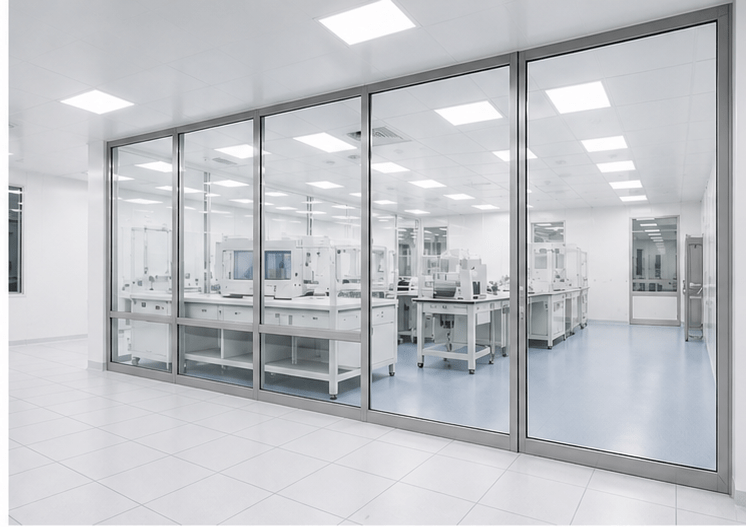
In U.S. cleanroom construction, wall and ceiling materials must support contamination control, cleanability, durability, and dimensional stability. Aluminum honeycomb panels are often used in cleanroom wall systems, ceiling panels, doors, and modular partitions because they offer a strong balance of lightweight structure and high flatness.
Their smooth aluminum surface helps reduce dust accumulation and supports easier cleaning. Their honeycomb core provides stiffness without excessive weight, which is valuable for modular cleanroom systems where panels must be easy to install, replace, or reconfigure. For semiconductor, pharmaceutical, medical device, and laboratory environments, these properties make aluminum honeycomb panels a practical material choice.
Conclusion
For cleanroom projects in the United States, the key point is simple: FED STD 209E is historical but still commonly referenced, while ISO 14644-1 is the current standard used for cleanroom air cleanliness classification. Understanding both systems helps buyers, engineers, and suppliers communicate more clearly during design, specification, and construction.
If you are planning a cleanroom project and need lightweight, flat, durable aluminum honeycomb panels for walls, ceilings, doors, or modular systems, contact Ulike for a quote or further cooperation.